Retaining Wall and Parking Pad Build in Nanoose
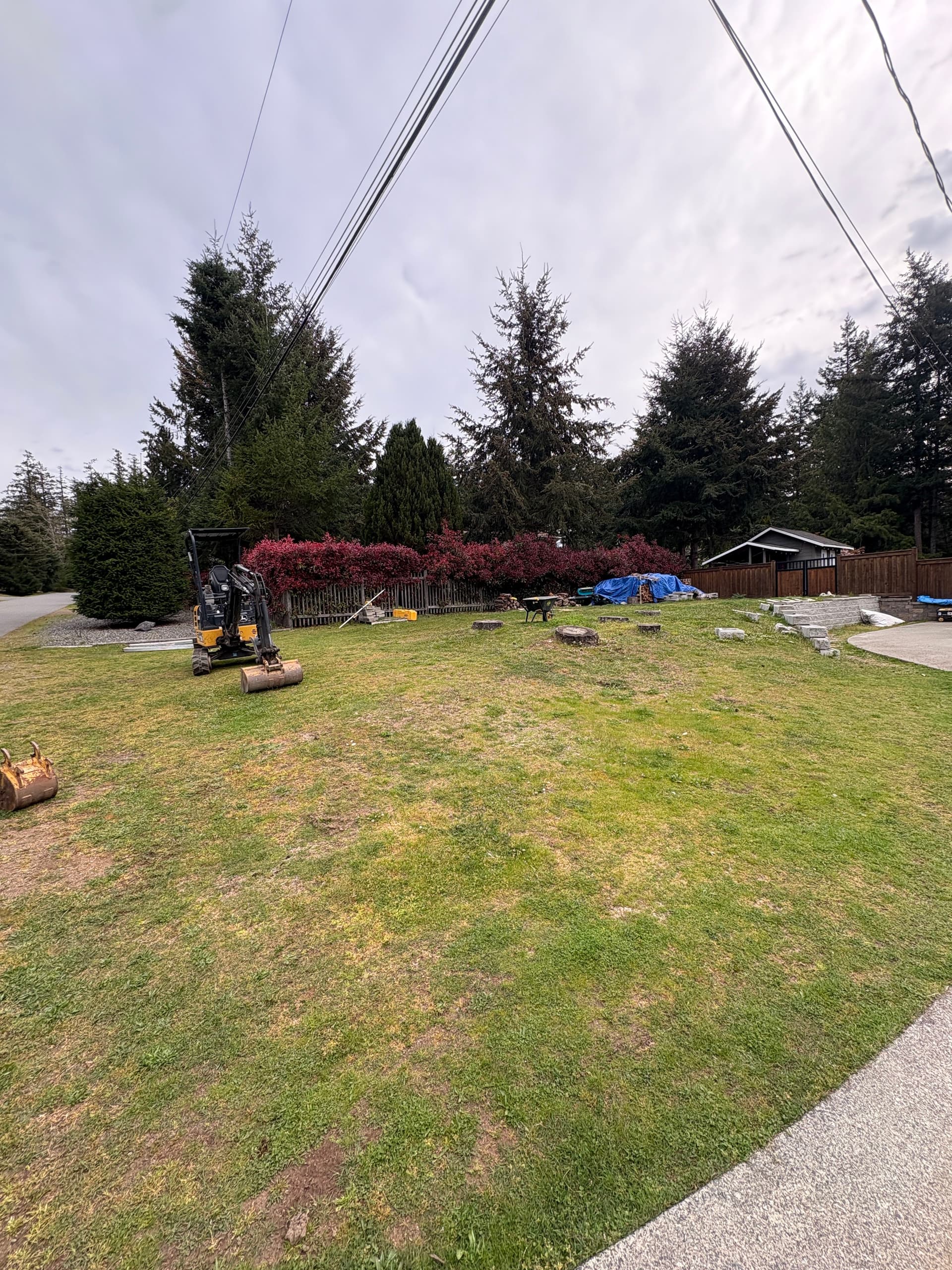
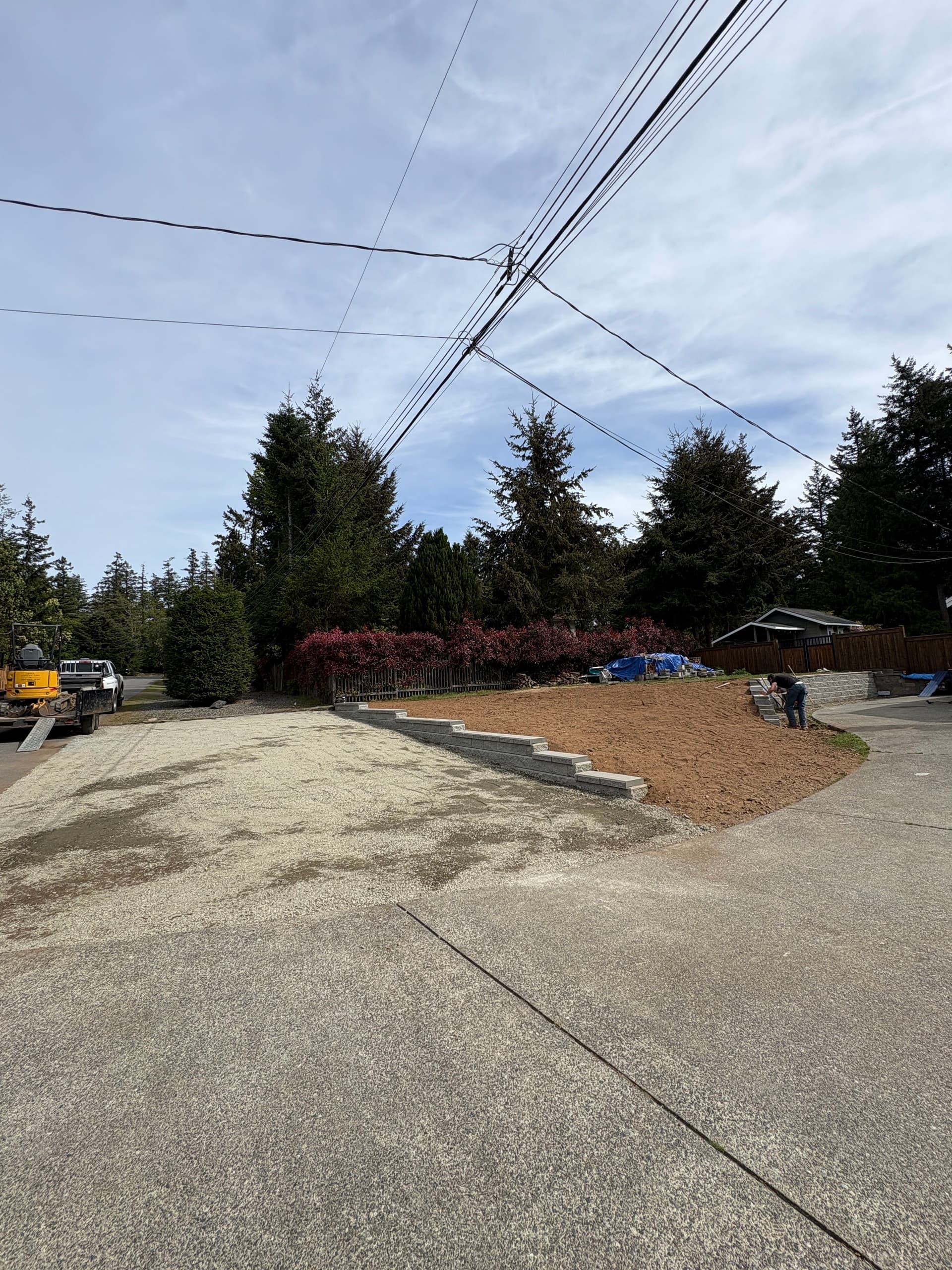
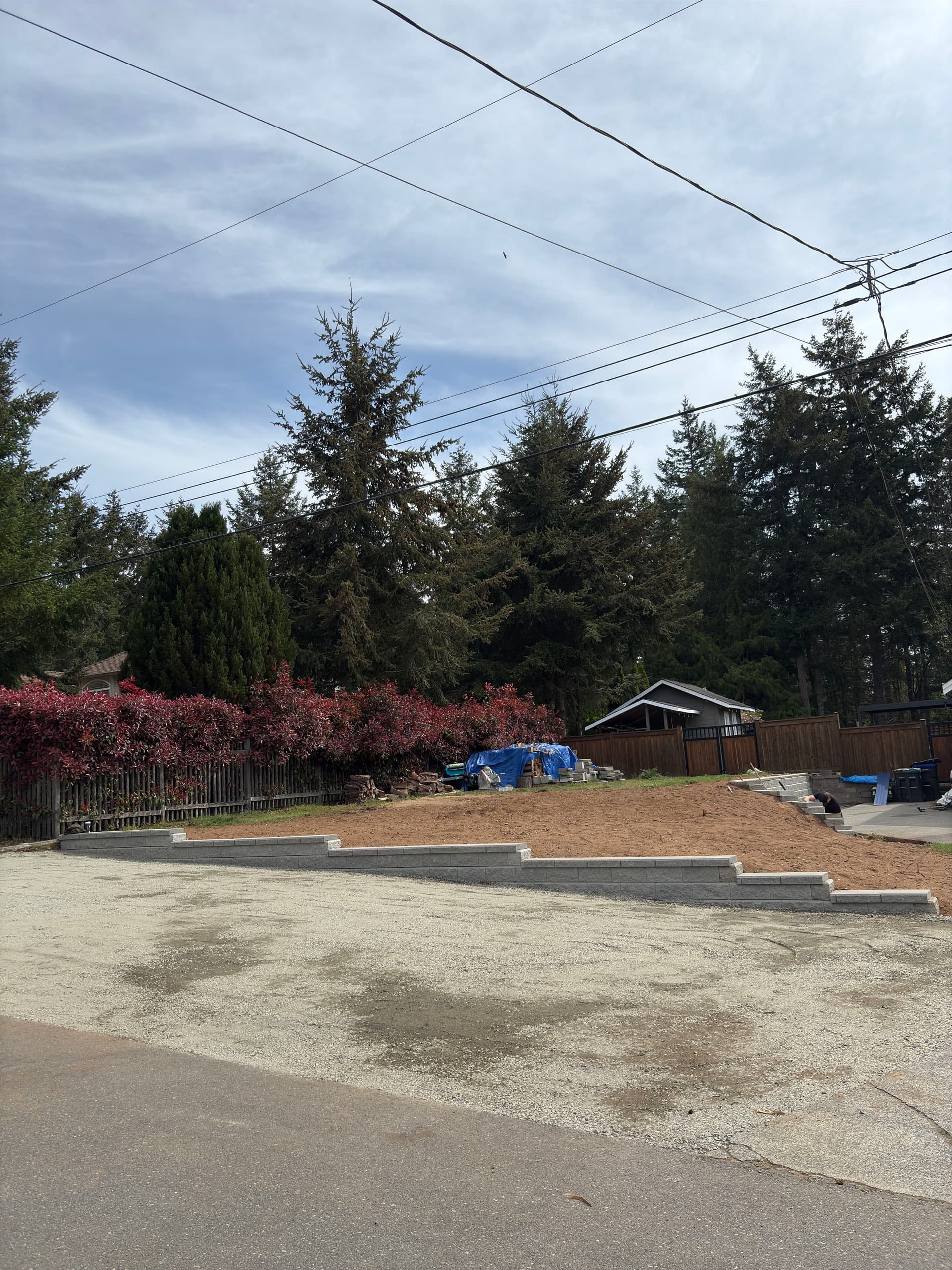
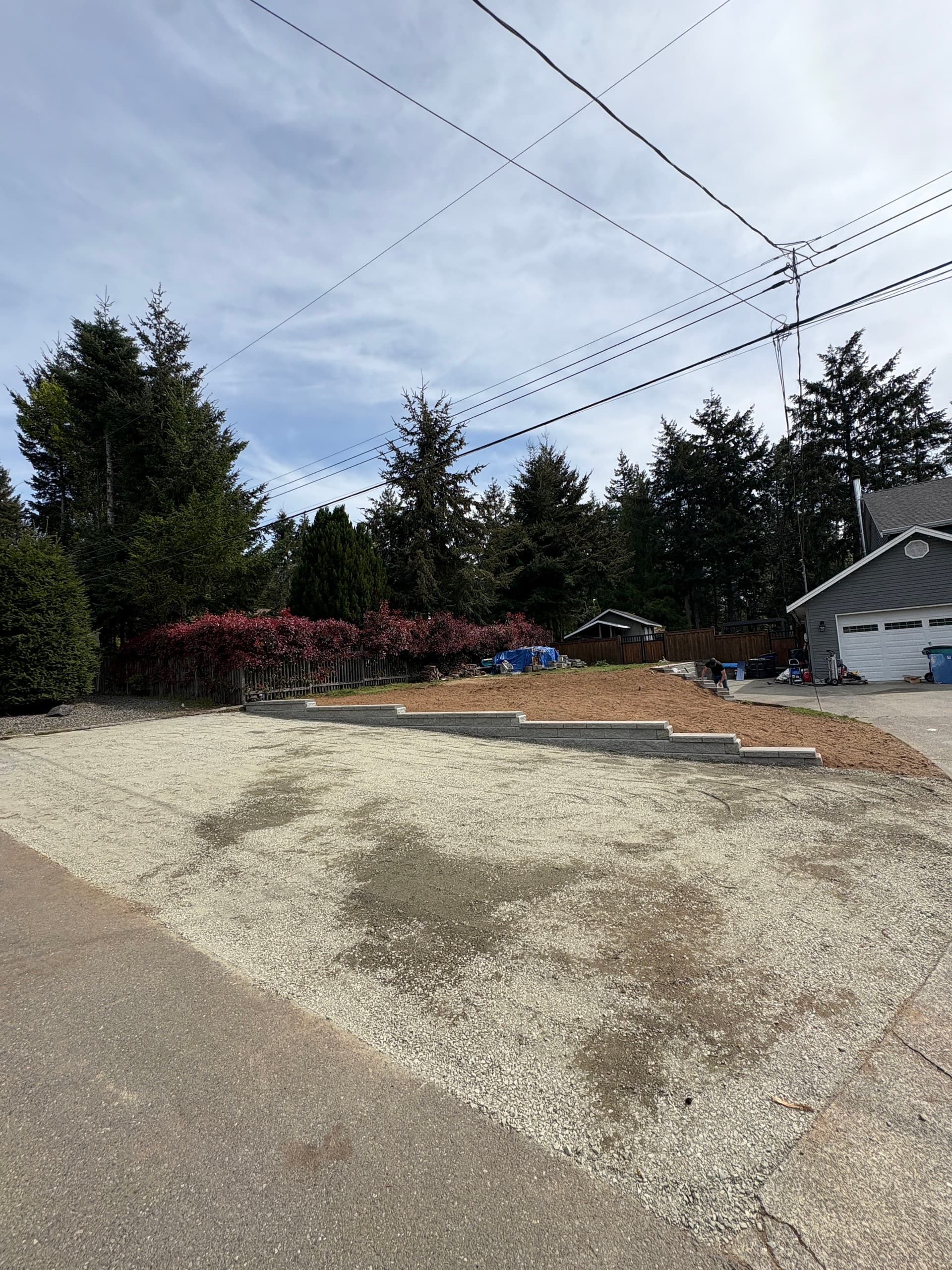
This property had a lot of potential but the sloped front yard was working against it. Uneven ground, no real parking solution, and soil that was just sitting there doing nothing useful. That's a pretty common situation on properties around Nanoose, and it's exactly the kind of thing we enjoy sorting out.
We started with excavation and grading to get the land working with the layout instead of against it. Getting the grade right is honestly the most important step - it controls drainage, gives the retaining wall a solid foundation to work with, and determines how functional the finished space is going to be. Skipping ahead without nailing that first just creates problems down the road.
The retaining wall came in as a stepped, tiered design to manage the slope cleanly. Rather than one tall wall trying to hold everything back, stepping it down keeps the pressure distributed and gives the whole thing a much cleaner finished look. The parking pad was built out in crush and gravel, giving the homeowner a solid, low-maintenance surface right off the road.
What we ended up with is a property that's genuinely easier to use. Parking is no longer an afterthought. The slope is controlled and stable. And the whole front area has a clean, organized feel that wasn't there before. That's really what this kind of work is about - taking a space that's underperforming and making it actually work for the people living there.
Projects like this one are a good example of how retaining walls, grading, and landscape construction all tie together. None of it works as well in isolation. When you plan it as one connected scope of work, the results hold up better and look a lot more intentional.